6+ Years Of Experience In Hay Rake Machinery Manufacturing
As a hay rake manufacturer, we have been deeply involved in the rake field for many years, independently developing hay rakes. We hold nearly 100 technology patents, and our product development utilizes computer-aided design throughout. We also possess independent testing capabilities.
We have multiple production lines for hay rakes, mowers, and round balers, each with an annual production capacity of 2000 units.
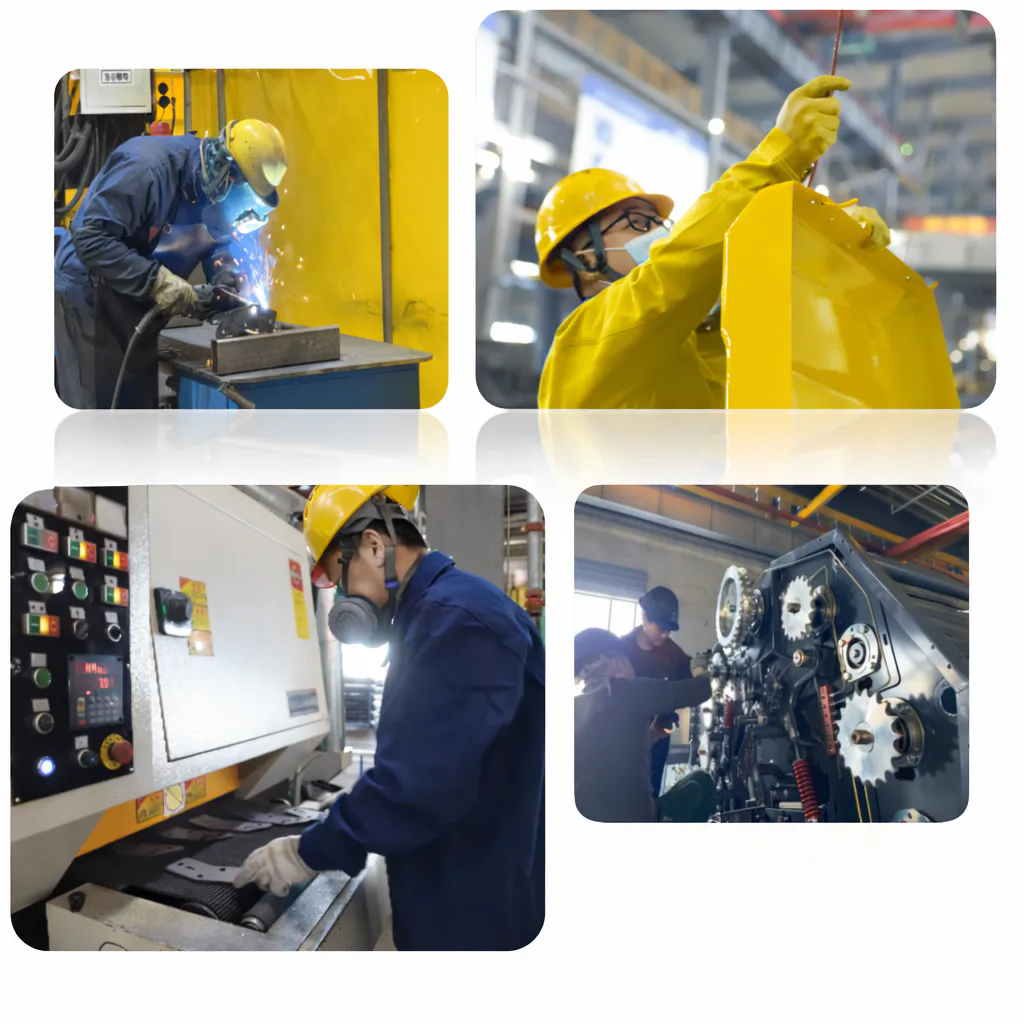
We are equipped with nearly 100 advanced pieces of equipment, including CNC laser cutting machines, automatic welding lines, and electrostatic spraying production lines.
Adhering to the service tenet of “starting with customer needs and ending with customer satisfaction,” we continuously promote the intelligent upgrading of agricultural and livestock machinery. We are committed to becoming a leading enterprise in the agricultural and livestock equipment industry, providing high-performance, cost-effective solutions to global customers.
What is Hay Rake?
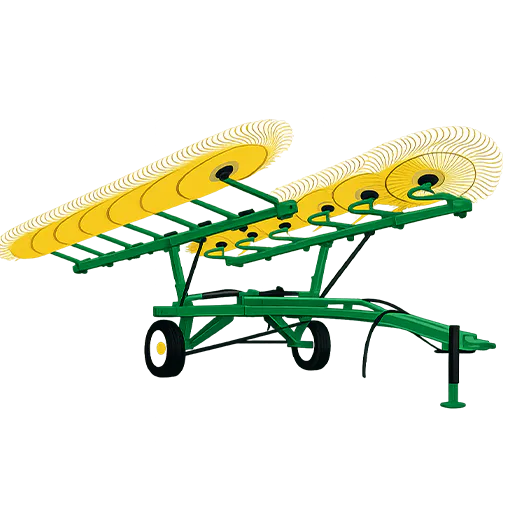
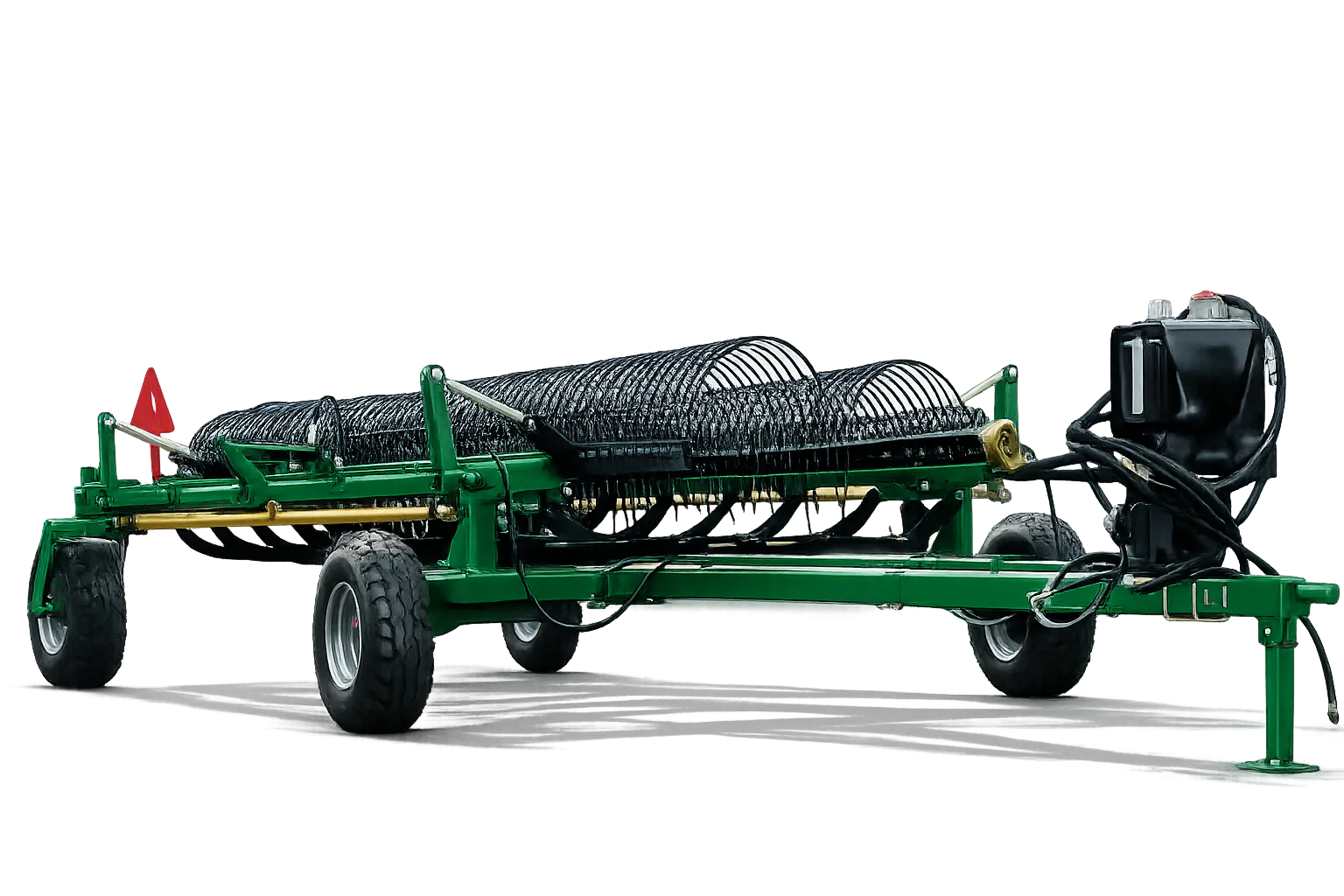
A hay rake is a piece of farm equipment used to gather and organize hay into rows or windrows, making it easier to gather with a hay baler or by hand. It is primarily used in the process of haymaking.
There are different types of hay rakes, including:
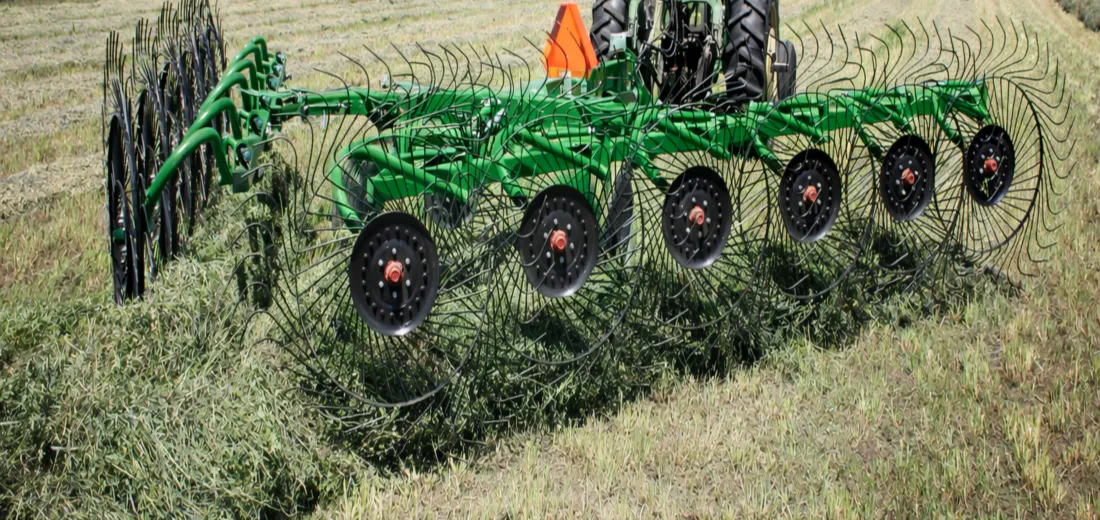
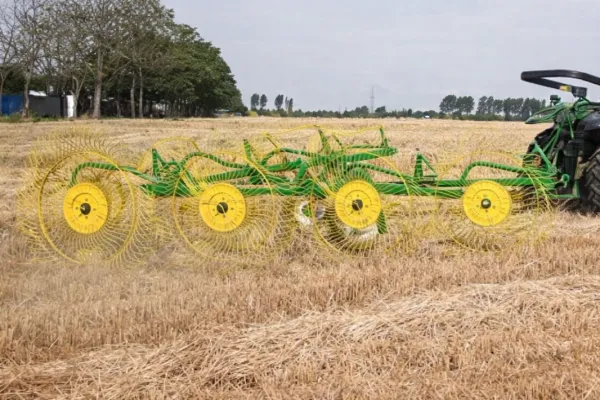
1. Wheel Rake: This type has a set of large, rotating wheels with tines that collect and gather the hay into windrows as it moves across the field.
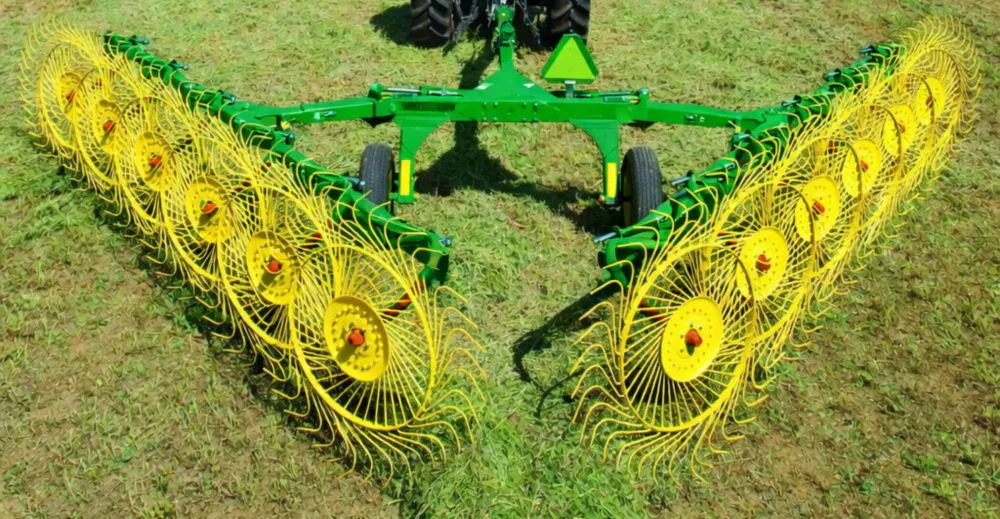
2. V-Rake: It has a V-shape design that helps to gather hay more efficiently by aligning the hay into a windrow. This design can often be adjusted to create wider or narrower windrows.
3. Sickle Bar Rake: This type combines a mower and rake, using a bar with a series of blades to cut and gather hay simultaneously.
4. Rotary Rake: A more advanced type of rake, which uses rotating tines to gather and fluff the hay into windrows quickly. This method is efficient and helps to preserve the quality of the hay.
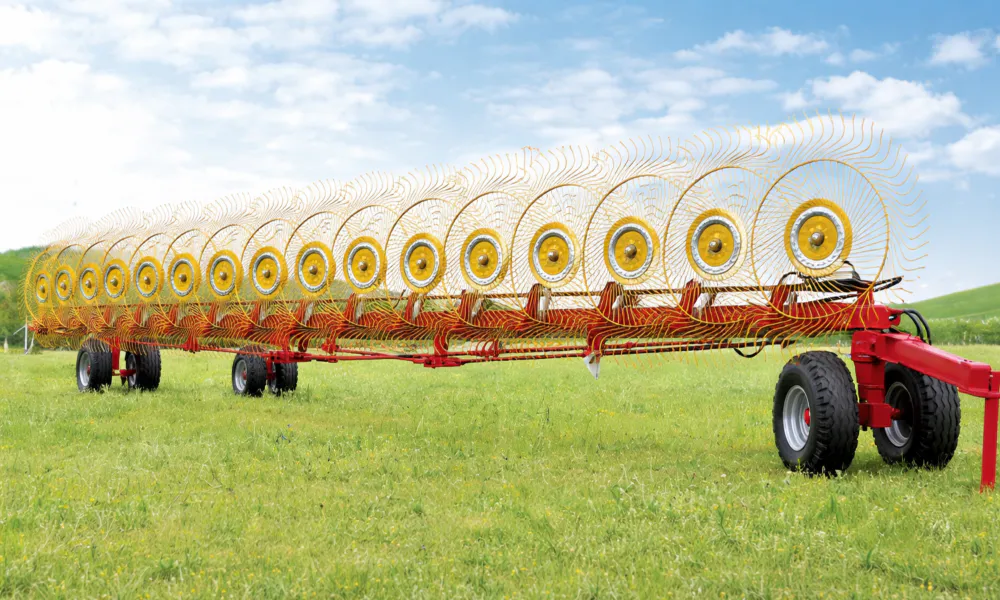
Hay rakes for tractors are commonly used in large farming operations where hay production is a significant task, allowing for a faster and more uniform gathering process.
Hay Rake Working Principle
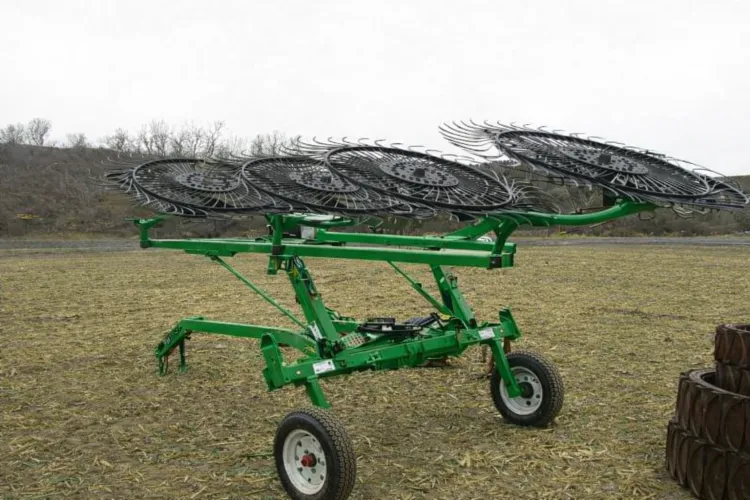
The disk-type hay rake is powered by a tractor, usually with an engine output between 50-75 kW (approximately 75-102 horsepower), and is primarily used in grassland and agricultural fields to collect cut and dried grass or straw into rows for further processing.
Working Mechanism:
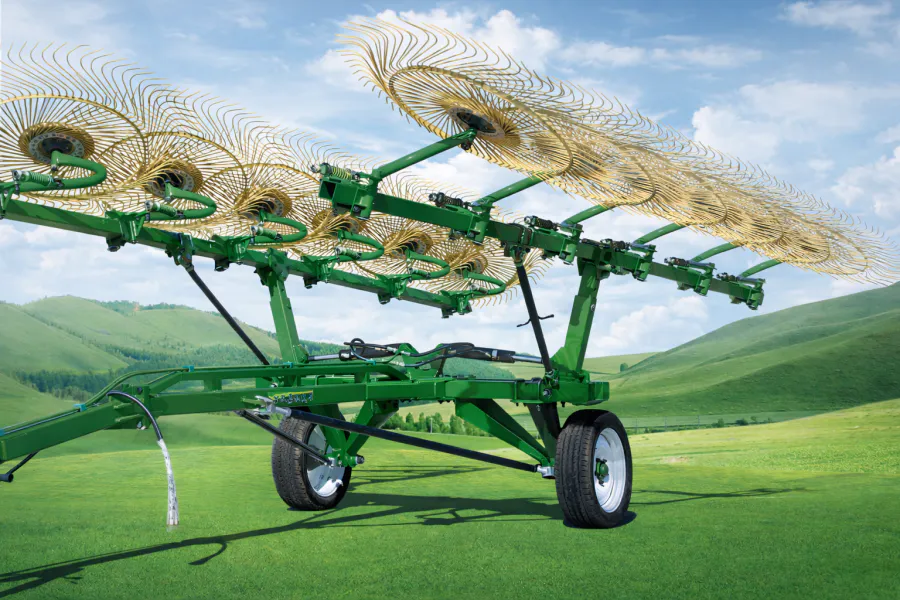
It employs disk-shaped raking wheels, typically between 15 to 17 disks, each equipped with metal fingers, which move in a circular motion. These disks rotate in such a way that they gather and move the hay into neat, uniform rows (windrows).
The disk rakes are designed with a wide working width, typically around 9 meters, ensuring efficient coverage of large areas in a short period.
Hydraulic Control:
The lifting and lowering of the raking disks are controlled hydraulically. This feature allows the operator to adjust the height of the rake depending on the field conditions, ensuring optimal operation even on uneven ground.
This disk-type hay rake is popular for its high efficiency, wide working range, and ability to work in a variety of terrains, making it a valuable tool for large-scale hay and straw collection.
Products Category
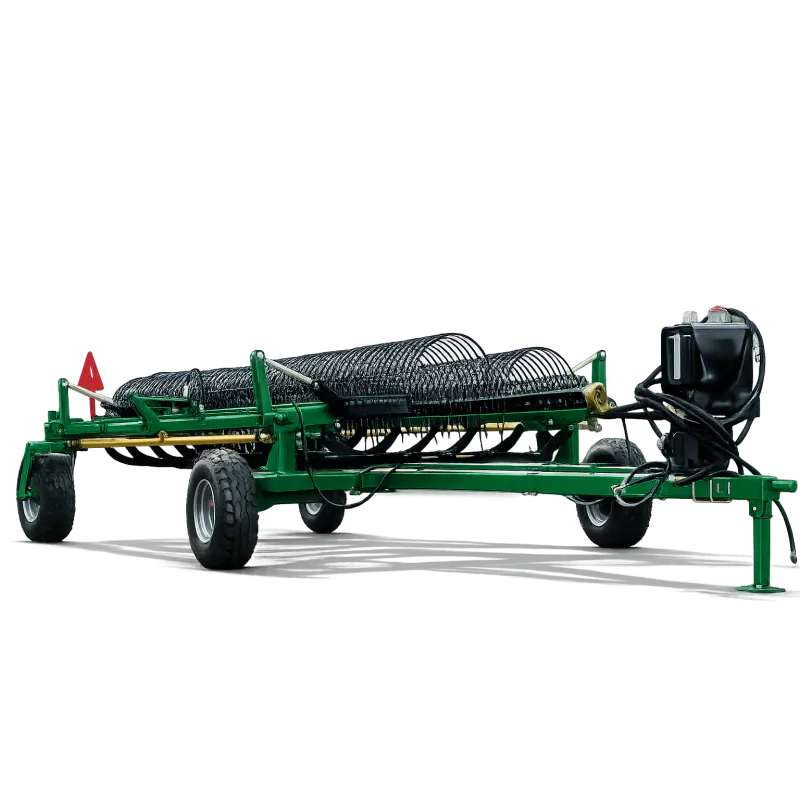
9LH-12 Horizontal Hay Rake
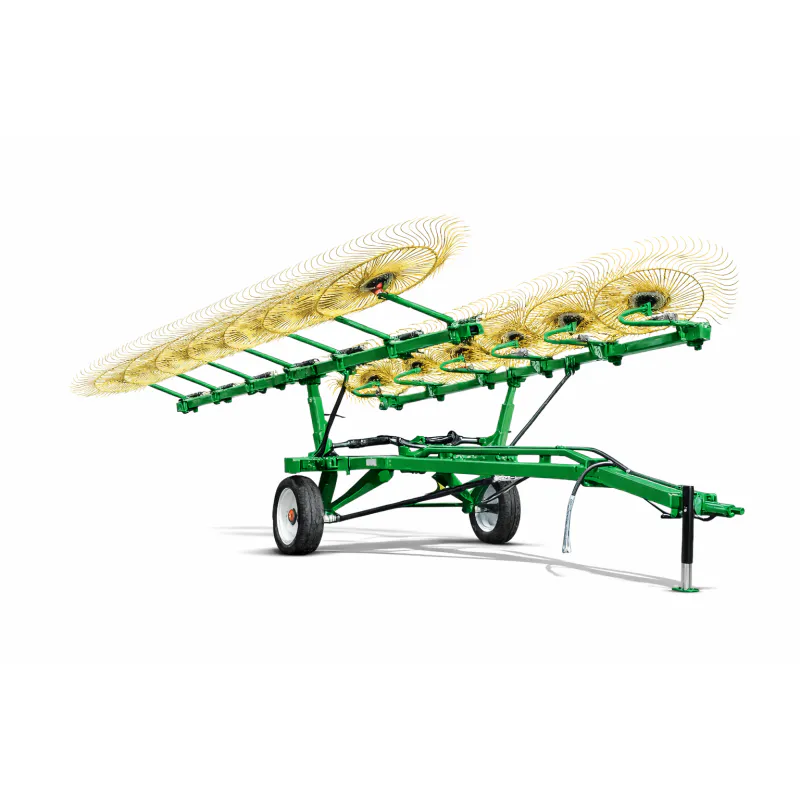
9LZ-6.0 Disc-Type Hay Rake
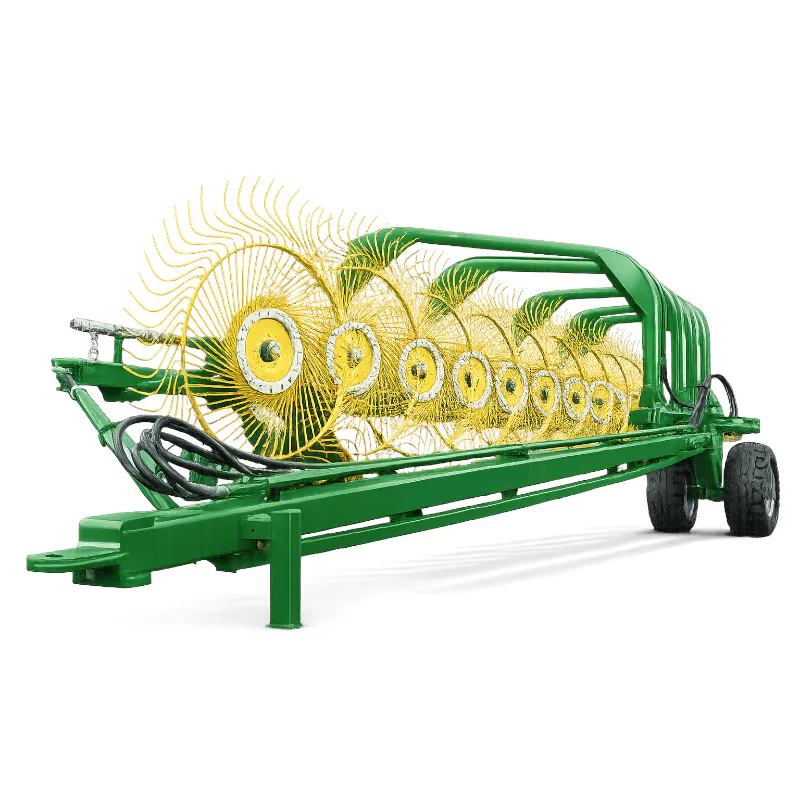
9LZY-9.0 Disc-Type Hay Rake
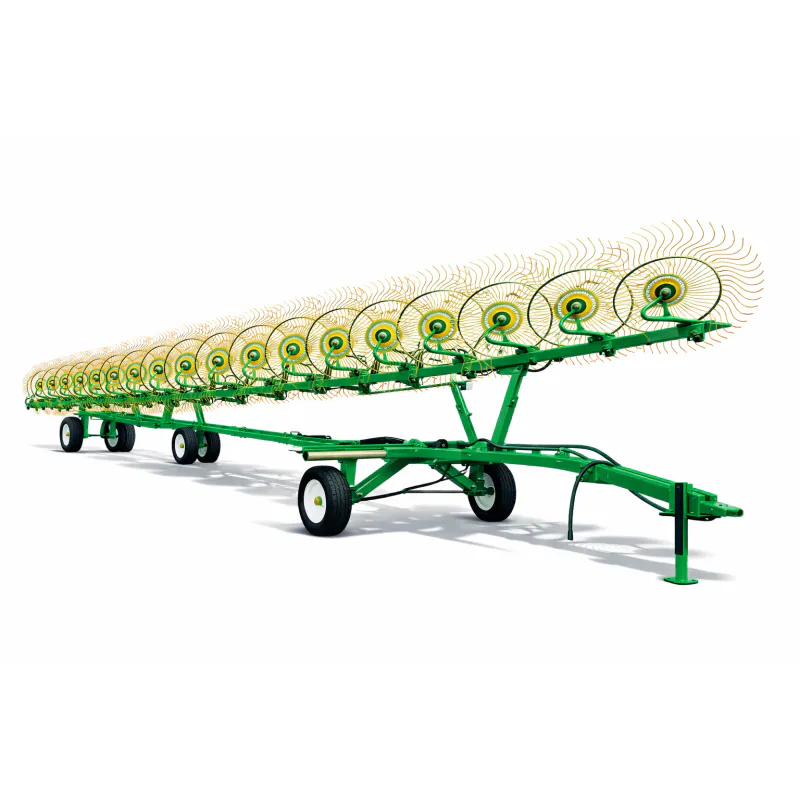
9LZD-9.0 Disc-Type Hay Rake
Product Specifications Overview
| No. | Item | Unit | 9LH-12 Horizontal Hay Rake | 9LZY-9.0 Disc-Type Hay Rake | 9LZ-6.0 Disc-Type Hay Rake | 9LZD-9.0 Disc-Type Hay Rake |
|---|---|---|---|---|---|---|
| 1 | Model Name | / | 9LH-12 Horizontal Hay Rake | 9LZY-9.0 Disc-Type Hay Rake | 9LZ-6.0 Disc-Type Hay Rake | 9LZD-9.0 Disc-Type Hay Rake |
| 2 | Structure Type | / | Towed Lateral Type | Wheel Type | Wheel Type | Wheel Type |
| 3 | Hitch Type | / | Towed | Towed | Towed | Towed |
| 4 | Required Power | kW | 25–44 | 50–55 | ≥25.73 | 55–75 |
| 5 | Raking Width | m | 12 | 9 | 6 | 9 |
| 6 | Dimensions (Working) | mm | 5500×12000×1350 | 8400×11000×1750 | 7600×6800×1500 | 16800×3900×1600 |
| 7 | Dimensions (Transport) | mm | 9400×3400×1750 | — | — | — |
| 8 | Weight | kg | 1510 | 1100 | 1200 | 1240 |
| 9 | Working Speed | km/h | 5–10 | 8–10 | 7–10 | 8–10 |
| 10 | Transport Speed | km/h | — | 12 | ≤18 | 12 |
| 11 | Number of Wheels | pcs | — | 15 | 12 | 17 |
| 12 | Number of Tines | pcs | 168 | 900 (15 wheels × 60 tines) | 720 (12 wheels × 60 tines) | 1020 (17 wheels × 60 tines) |
| 13 | Windrow Width | m | — | 0.8–1.2 | 0.8–1.4 | 0.8–1.2 |
| 14 | Missed Raking Rate | % | ≤3% | ≤2% | ≤2% | ≤2% |
| 15 | Productivity | ha/h | 6–12 | 7.2–9 | 4.2–6 | 7.2–9 |
| 16 | Operators Required | persons | 1 | 1 | 1 | 1 |
Hay Rake Advantages
High Efficiency in Hay Collection
Hay rakes quickly and uniformly gather cut grass into windrows, making subsequent hay collection and baling much more efficient. This reduces the time and labor required for manual hay raking.
Improved Hay Quality
By forming uniform windrows, hay rakes help the hay dry more evenly, reducing the risk of mold and spoilage. This helps maintain the nutritional value and overall quality of the hay.
Adaptability to Different Terrain
Modern hay rakes are designed to handle various terrains, including uneven and sloped fields. This feature expands the rake’s usability across a broader range of land types.
Versatility
Many hay rakes can adjust the width of the rake and the size of the windrows, and can even adapt to different hay handling methods (such as rotating or combing). This flexibility makes the rake suitable for different farming needs.
Hay Rake Components
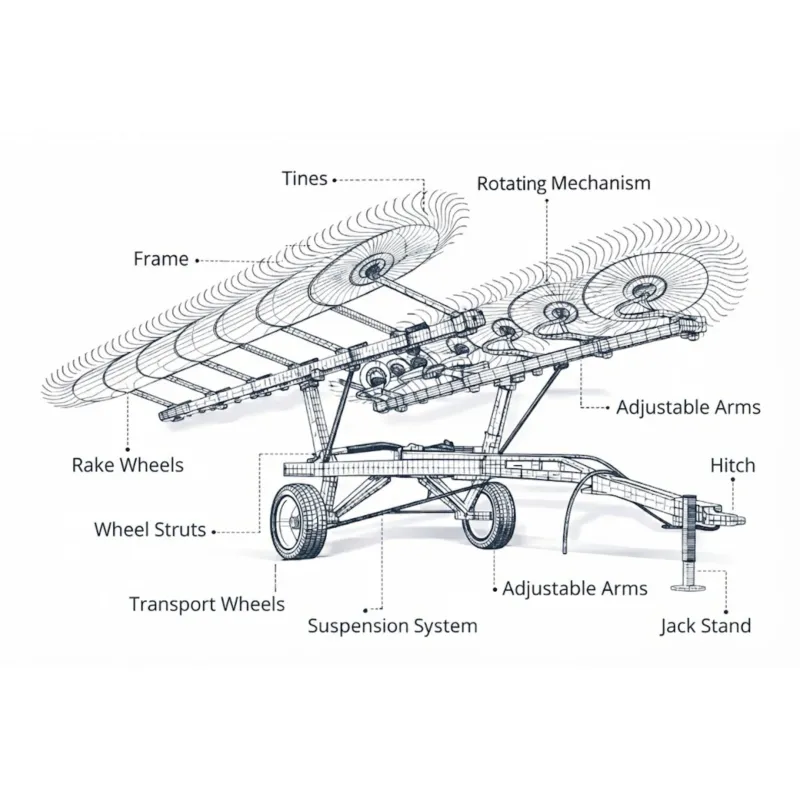
1. Tines
The tines are the key components of the hay rake used to lift and collect the hay from the ground.
The hay rake typically has multiple tines that rotate to clean and spread the hay efficiently.
2. Rotating Mechanism
The rotating mechanism drives the tines to spin and process the hay.
It is generally powered by a transmission system, enabling the rake to operate effectively during use.
3. Frame
The frame is the main structure of the hay rake, supporting all the mechanical components.
It determines the stability of the rake and is designed to be durable enough to withstand operational stress.
4. Hay Rake Wheels:
The rake wheels support the tines and other key components, ensuring the rake moves smoothly across the field.
They are typically equipped with rubber tires, providing good traction.
5. Wheel Struts
The wheel struts are the support structures that connect the rake wheels to other mechanical parts, ensuring stability while the hay rake moves.
6. Transport Wheels
Transport wheels are used to support the hay rake when moving it from one place to another.
These wheels are usually larger than the rake wheels to allow for easy movement over various terrain.
7. Suspension System:
The suspension system helps reduce vibrations while the rake is being towed over uneven ground, ensuring stability and reducing wear on the machine.
It allows the hay rake to adapt to ground irregularities for a smoother operation.
8. Adjustable Arms:
The adjustable arms allow the operator to change the rake’s angle or width as needed.
This feature helps the rake adapt to different working conditions, enhancing collection efficiency.
9. Hitch
The hitch is the part that connects the hay rake to the tractor, typically located at the front of the rake.
Through the hitch, the rake is pulled across the field by the tractor.
10. Jack Stand
The jack stand is used to support the hay rake when it is not in use, keeping it stable.
When the rake is in a non-working position, the jack stand can be adjusted in height to keep the rake off the ground.
Our Advantages
ISO9001 Quality Management System Certification
CNC laser cutting machines
Laser & Plasma Cutting Systems
Automated Assembly Lines
Electrostatic spraying production lines Systems
Digital Factory & Industrial Software
Dynamometer Testing Stations and so on
Hay Rake Application Scenario
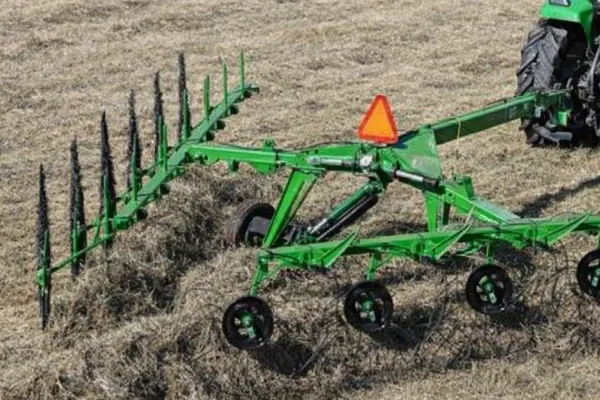
Crop Residue Management
Grass and Straw Collection
Crop Residue Management
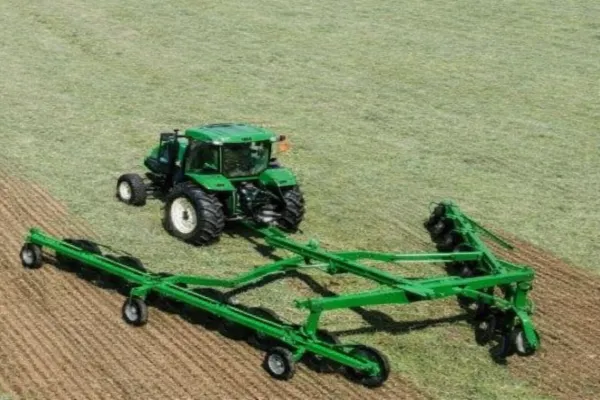
Pasture Management
Customer Case Studies